By Sister Angela Perez
Swarms of living creatures will live wherever the river flows. There will be large numbers of fish, because this water flows there and makes the salt water fresh; so where the river flows everything will live. […] Fruit trees of all kinds will grow on both banks of the river. Their leaves will not wither, nor will their fruit fail. Every month they will bear fruit, because the water from the sanctuary flows to them. Their fruit will serve for food and their leaves for healing.
Ezekiel 47:9,12
Season of Creation 2026, September 1-October 4, offers opportunities for prayer and action while exploring this year’s theme: Living Water. The theme comes from Ezekiel 47:9,12 as a powerful biblical vision of hope and ecological healing. Set amid exile and loss, the image of living water flowing from God’s sanctuary reveals divine healing that renews land, water, biodiversity and human responsibility towards the whole creation. We offer this series of stories about how Sisters of Mercy are taking action to care for our living waters.
The beautiful Pacific Ocean that surrounds Guam is a vital provider of food, solace and joy to my people—the indigenous CHamoru and all Guamanians. But it faces irreversible damage and possible extinction from the deep seabed mining.
I was born just after World War II, as Guam was recovering from the devastation of war. Some of my happiest memories are of the sea. We went to the beach not because it was a special destination, but because the ocean was simply part of our life. It fed us, gathered our families, restored us, and reminded us that we belonged to this island and to one another.
This is why the prospect of deep-sea mining is not an abstract environmental question for me. It touches something deeply personal: our relationship with the ocean that has sustained our people for generations.
I only became alerted to the dangers of this type of mining when the Trump administration issued an executive order “Unleashing America’s Offshore Critical Minerals” in spring 2025, prioritizing corporate access to deep-sea minerals in international waters.
The U.S. government proposes leasing 28 million hectares (69 million acres) of ocean floor for seabed exploration. This large-scale deep-sea mining with few regulations in international waters is unprecedented and violates the core tenants of environmental justice, according to the United Nations.
Mining companies drop heavy, bus-sized machines to the ocean floor, where they pick up potato-sized “nodules” of critical minerals like copper, cobalt, nickel, zinc, silver, gold and rare earth elements, according to the World Resources Institute.
These mining machines threaten every aspect of life. They kill or maim marine life, disrupt the ability of deep-sea species to feed and reproduce, harm the livelihoods and food security of people who fish, impair the social cohesion of small island communities and increase the speed of climate change.
I recently submitted formal comments to the U.S. Bureau of Ocean Energy Management (BOEM) strongly opposing seabed mining near our island and Rota, the “Friendly Island” in the Western Pacific Ocean.
“Seabed mining would destroy the marine ecosystems that our people on our islands rely upon. There are no economic reasons that can justify the destruction of the ocean and the subsequent harm that will affect our people in these communities. Imbued with the cultural heritage of our ancestors, we are connected to … all living beings on land, sea, sky, all of creation and our Creator.”
The threatened waters around Guam include the Mariana Trench, the deepest oceanic trench on Earth (about 11,000 meters or 7 miles deep), a global treasure that was declared a national monument in 2009.
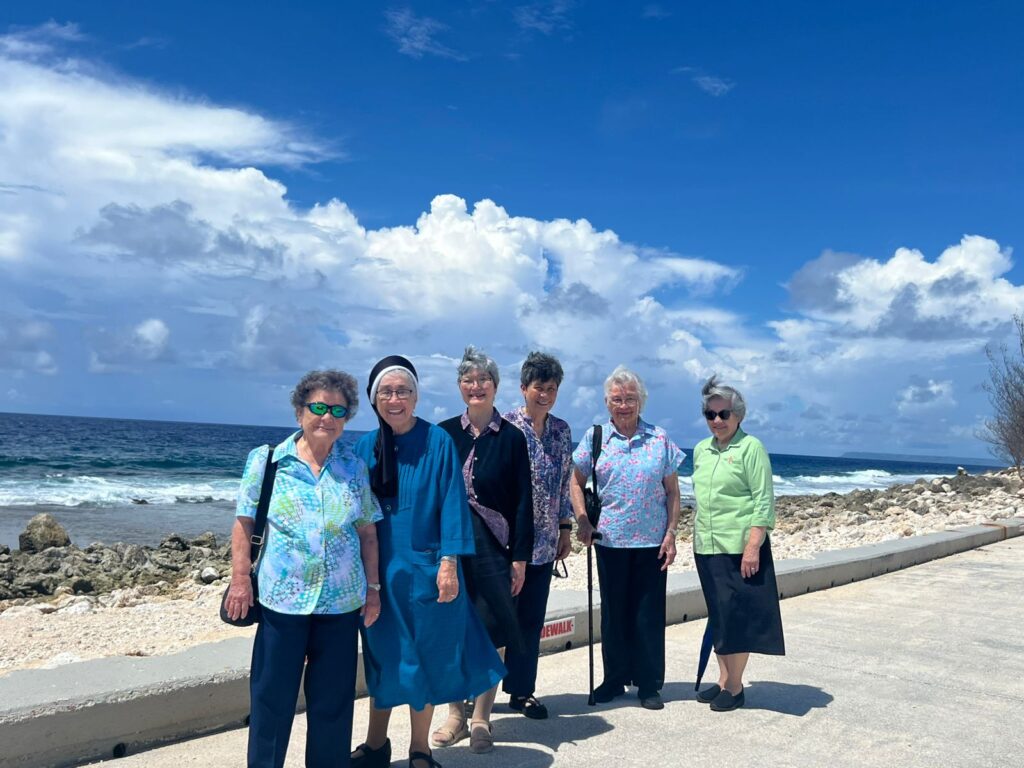
A matter of environmental justice
Guam and other U.S. territories in the Pacific stand united in their opposition to seabed mining, and our bishops too are pleading for restraint.
A recent pastoral letter signed by Archbishop Ryan P. Jimenez of Guam, the president of the Episcopal Conference of the Pacific (CEPAC), stated, “Until there is convincing evidence that such activity can be undertaken without causing serious or irreversible harm, prudence calls us to exercise great caution.”
For me, this call to prudence is not a rejection of development. It is a reminder that when the possible consequences are irreversible, wisdom requires us to slow down, listen, study and protect what cannot be replaced.
For people in the Pacific, this is also a question of environmental justice. Decisions affecting the ocean surrounding our islands should not be made without seriously listening to the people whose food, culture, livelihoods and future are bound to that ocean.
Guam is tiny and has very limited power with the U.S. government. Moral persuasion from all sectors of our society, including the Church, is all we have. We all need to speak out.
Delighting in the sea
When I was preparing my testimony to the BOEM, I reflected on our founder Catherine McAuley’s emphasis on keeping our hearts “in the same place, centered in God, for whom alone we go forward or stay back.”
God calls us to live upon the Earth in a centered way, in harmony with each other and all of creation.
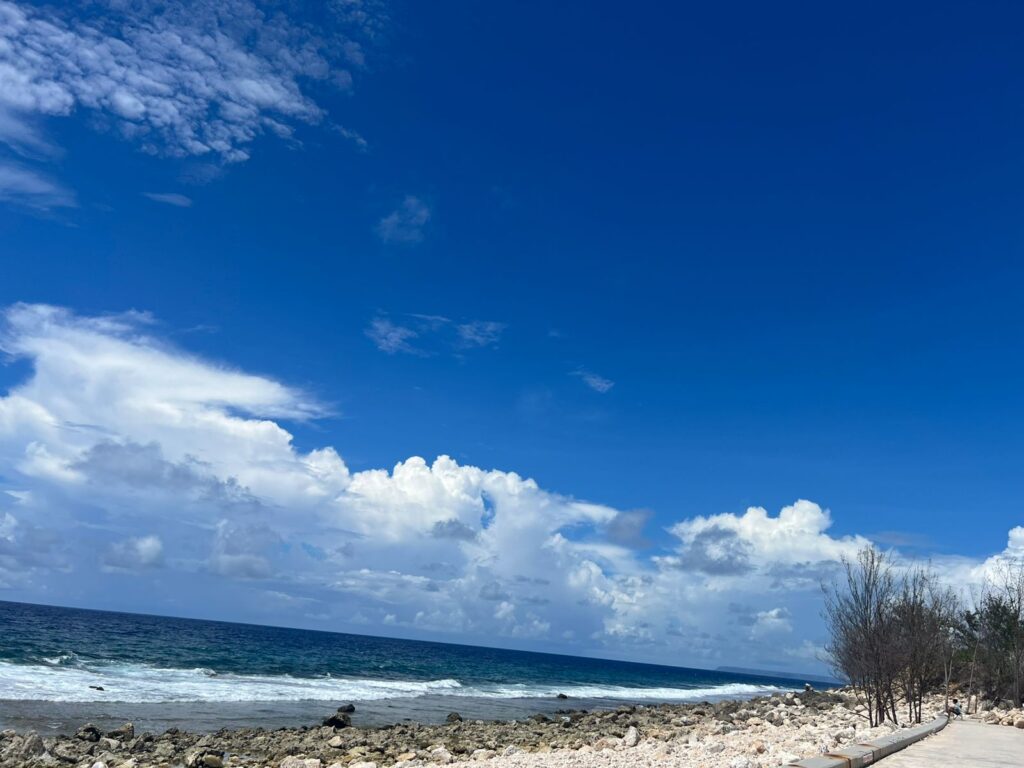
Our people still delight in going to the sea to celebrate any occasion: a birthday, a family reunion, a wedding reception or an anniversary.
From generation to generation, the ocean has been a source of food, healing, joy and connectedness for our people. It reminds us that none of us exists alone: we are connected with one another, with creation and with our Creator.
Before we allow irreversible changes to the deep ocean, we need to stop and listen—to science, to Pacific communities, to one another, and to the voice of creation itself. The ocean has cared for us for generations.
The question before us now is very simple: How will we care for the ocean entrusted to us?